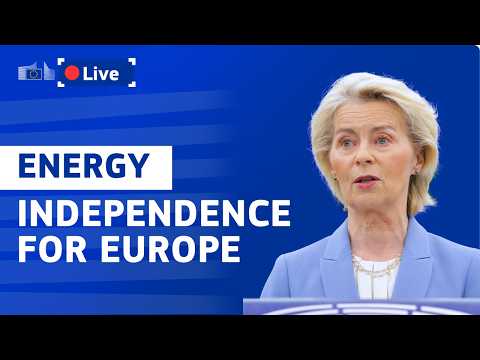
Europe’s most valuable listed company is the Dutch group ASML, worth roughly 693 billion dollars. Elon Musk’s personal fortune is approaching a trillion. Set those two numbers side by side and the question of Europe’s role in the AI race acquires an uncomfortably precise sense of scale.
The Economist’s editor-in-chief, Zanny Minton Beddoes, met Musk at his Texas Gigafactory. It is his first long-form interview since SpaceX went public, and the chapter list sets out the priorities without ceremony: the timeline for AI, self-regulation of the industry, China’s position, work becoming optional, the question of one man’s power, Starlink and Ukraine. Europe comes up, but mainly as the subject of a political row — not as a builder.

Watch the episode on Innohub TV 85 min
Source: The Economist, 29 July 2026 — full interview, 85 minutes.
A five-year forecast is best read the way you would read a profit warning: the direction is usually right, the timing rarely. Self-driving cars were supposed to be finished years ago, and the promise was renewed annually. The direction was right all the same, and denying it today would be embarrassing. You are free to disagree about the year; about the direction you are not — and that is precisely what makes Europe’s position awkward, because here the argument is still about how AI should be regulated while elsewhere it is about who gets to build it.
Capability is not the problem, and that is worth saying out loud. Stockholm-based Lovable passed a hundred million dollars in annual recurring revenue in eight months and has since grown beyond four hundred million — with 146 employees. Finland’s Iceye sold radar satellite services to Germany for 1.76 billion euros, more than several European states spend on their entire space programmes. These are not the exceptions that prove the rule. They are evidence that the bottleneck sits somewhere else.
The bottleneck is scale and speed. In the United States you build first and ask permission afterwards; in Europe you ask permission and never get round to building. The capital exists, but it moves slowly and in small tranches, and when a European growth company needs a hundred-million round it is still most often raised on the other side of the Atlantic — and ownership leaves with it. Europe has built itself a padded room in which the risk has been outsourced along with the return.
Give the other side its due. Regulation is not the opposite of competitiveness, and the GDPR has turned out to be a sales argument more often than an obstacle — European data residency is a competitive advantage today, and one customers will pay for. Musk himself talks in the interview about the industry regulating itself, which is in its way a concession: nobody in this business believes the market will handle it alone. The problem is not regulation as such, but regulation without an industrial base of your own. That is an opinion about a world other people are building.
For an individual business owner, Europe’s choice becomes visible at exactly the point the interview’s Starlink chapter illustrates. When one company’s service is part of the infrastructure of a war, the question of one man’s power stops being philosophical and turns into a procurement question. The scale is different, the logic identical in every small European firm whose visibility, communications and payments run through the same foreign platform. Dependency costs nothing until the terms change, and then it costs everything at once.
Europe’s role will not be settled by how quickly the rules are written. It will be settled by whether Europe buys from its own suppliers when that is expensive and uncertain — as Germany did from Iceye — and by whether capital moves fast enough that the next Lovable can keep growing here after the first hundred million. AI is redealing the pole positions whether or not the five-year estimate lands. Second place in that race is still open to Europe. There is no third.
Continue reading
You may also like



Innohub TV
Watch this content also on Innohub TV
We picked clips from Innohub TV that continue the same topic.