
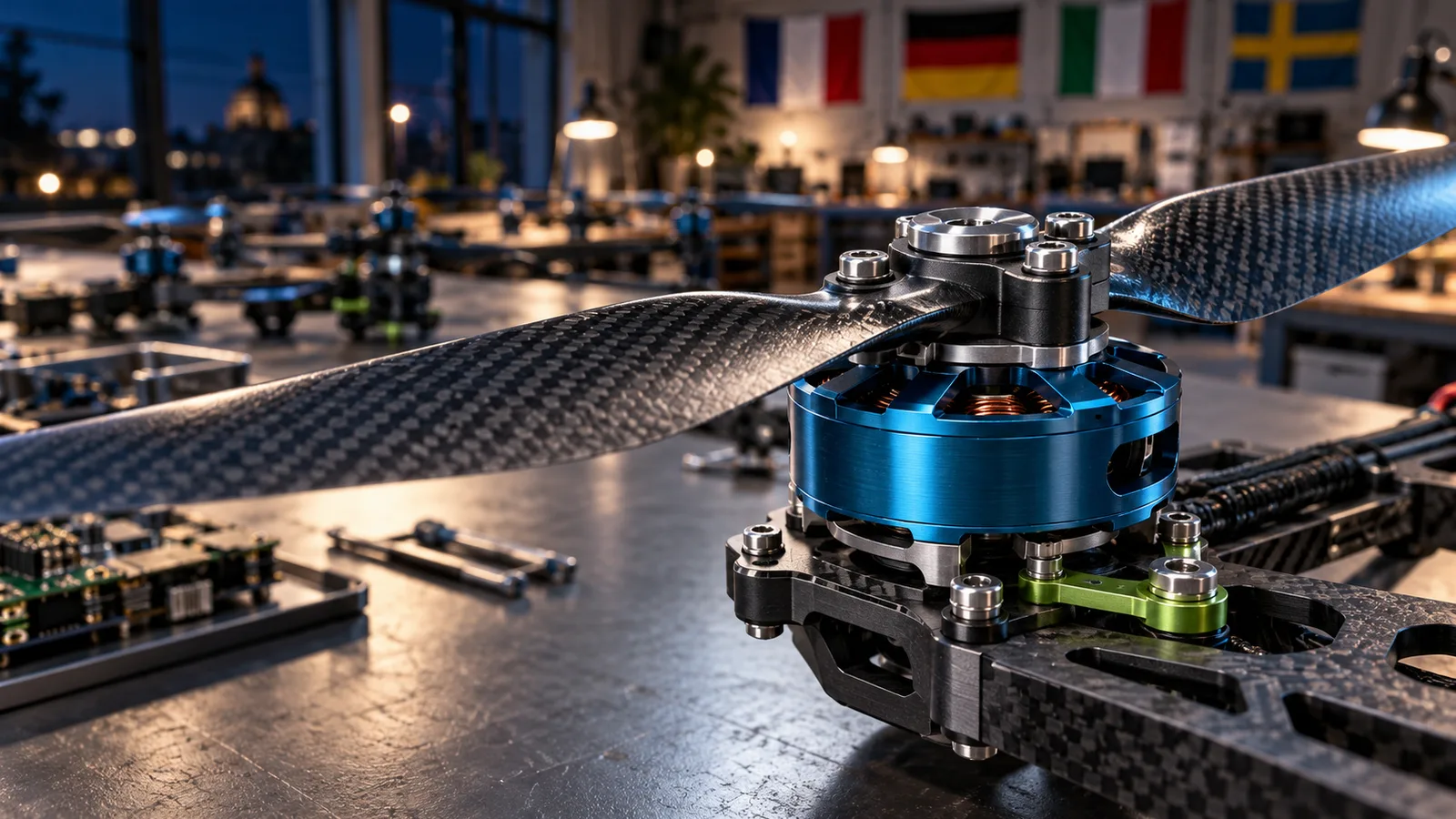
Europe has the talent, the money and the urgency, but it still lacks one shared defence market, and that is exactly where startups and small firms come in.
Many decisive inventions were born in wartime, and Europe is now living through the kind of moment that produces them. The United States has changed course on Russia. President Trump granted an exemption to the Russia sanctions just before they took effect, announced purchases of Russian diesel, declared an “energy ceasefire” that Kyiv learned about from the news, and once again called for a change of leadership in Ukraine. The European Union answered on 12 October with the broadest sanctions listing it has ever adopted, close to 1,600 people and entities tied to Russia’s war industry. Defence Commissioner Andrius Kubilius has said that the EU and Ukraine must consider a peace strategy of their own, and the EU has been Ukraine’s only serious funder. This is Europe’s moment to show what it can build.
The history is not subtle. Radar and electronic warfare came out of the Second World War, not least at Harvard’s Radio Research Laboratory. The first computers, Colossus and ENIAC, were built for codebreaking and artillery calculations. The jet engine and the mass production of penicillin were wartime achievements too. Later came DARPA and ARPANET, the forerunner of the internet, and GPS, a military satellite system before it was a map in your pocket. Silicon Valley grew because Frederick Terman at Stanford deliberately wired the university, its wartime radar research and Cold War defence orders into companies and startups. I am not claiming every breakthrough has a military pedigree. I am claiming that focused public demand, patient money and a tolerance for failure are the conditions under which decisive inventions appear, and war has a way of supplying all three.
Now look at what Europe does with the same ingredients. We run twenty-seven separate procurement systems, each with its own rules, timetables and favoured suppliers. We fund overlapping programmes that duplicate each other’s engineering. The FCAS fighter programme has run aground, and cooperation on tanks has proved painfully hard. Twenty-seven small defence industries do not add up to a Silicon Valley. One shared one could.
The encouraging part is that the shift has begun. Joint procurement is no longer a seminar topic. Germany is handing Ukraine ten Patriot batteries. France and Italy are delivering Aster 30 missiles by the end of October and SAMP/T air-defence systems in 2027. A European Patriot factory is due in 2027. The EU and Ukraine have sealed a drone agreement that sets up joint ventures, pairing Ukrainian battlefield experience with European industrial capacity. Put those pieces together and you get something Terman would recognise: a large and predictable customer, a research base, and a supply chain that needs thousands of small firms to fill it.
Founders and micro-entrepreneurs should pay close attention here, because the lesson of Silicon Valley was never that the prime contractor got rich. It was that the subcontractors did. Dual-use technology, the same component sold to a hospital and to an army, is the natural entry point for a company of three people: sensors, batteries, secure communications, machine vision, composite parts, software that has to survive a muddy field. The economics of open AI models for small business make much of this affordable at a scale it was not five years ago. And the buyer is asking for precisely the discipline small firms are good at, safety that starts with limits rather than promises, documented, testable and deliberately boring.
I know the objection. Defence is slow, the paperwork is brutal, and the customer is a government. None of that is an argument for leaving the field to a handful of giant vendors. The boards of mid-sized companies that are already using AI tools to think about strategy should put one simple question on the agenda: which of our products has a defence or civil-protection customer we have never bothered to call?
So here is my advice. Find out who the prime contractors in your country are for air defence, drones and secure communications, and read their supplier pages. Register as a supplier with your national defence procurement agency. Study the European Defence Fund calls, which are written for consortia and reward those that bring small firms inside. If you build anything that flies, senses or communicates, follow the EU-Ukraine joint ventures closely; they will need European subcontractors. Get your quality and security paperwork in order before anyone asks. Founders do not need another pep talk from the self-help industry. They need a customer with a long contract and a reason to pay. Europe is about to become that customer. I would rather we build our Silicon Valley on purpose than wait for history to hand it to us.

Twenty-seven small defence industries do not add up to a Silicon Valley.
Sources

Continue reading
You may also like




Innohub TV
Watch this content also on Innohub TV
We picked clips from Innohub TV that continue the same topic.


