A contested island, a sticky inflation report, and a party fight over midterm identity — what this week's news actually means for founders and operators
Twenty-five years after the September 11 attacks, American networks spent Friday doing something news coverage rarely does well: sitting still with grief and consequence at the same time. But tucked inside the same broadcast was a story that speaks directly to anyone running a business today — a Red Sea chokepoint under new pressure, a stubborn inflation report, and a political party wrestling with its own identity heading into the midterms. Put together, they’re a case study in supply chain risk, and why founders and operators can’t afford to treat geopolitics as background noise.
A Reminder From 25 Years Ago: Shocks Compound
The anniversary coverage traced how a single September morning in 2001 pulled the United States into its longest war, reshaped air travel, security spending, and foreign policy for a generation, and — as one segment noted — left Afghanistan in a place disturbingly close to where it started. Hillary Clinton’s reflections on the losses and lessons of that day underscored a point that’s easy to forget in a news cycle built for quick takes: the costs of a single shock rarely stay contained to the day it happened.
That’s not a history lesson. It’s the same dynamic playing out right now, just faster and closer to your invoicing cycle.
The Red Sea Has a New Problem
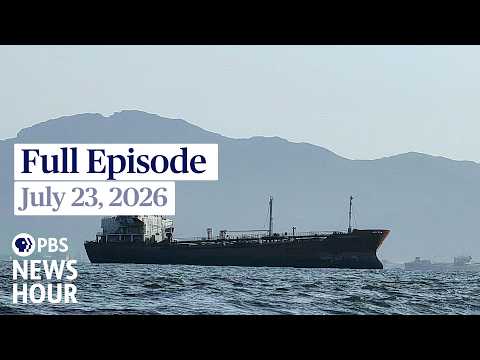
According to the same broadcast, Iran-backed Houthi rebels have captured an island sitting at the entrance to the Red Sea — a position that lets them threaten one of the world’s key shipping lanes for oil exports. If that sentence sounds abstract, it shouldn’t. Vessels routed away from that corridor don’t disappear; they sail longer, burn more fuel, and arrive later, and those costs eventually show up in a container invoice or a freight quote near you.
Why One Island Can Move Global Oil Prices
Energy markets are famously sensitive to chokepoints, and shipping lanes are exactly that: narrow, unavoidable, and impossible to route around cheaply. It’s the same logic playing out in other trade disputes — the ongoing U.S.-Canada trade war is a reminder that even allied economies can turn a shared border into friction overnight. A contested island at a global shipping gateway is the same idea with sharper edges.
A single contested island can do more to your margins than a bad quarter ever will.
Inflation Isn’t Cooling as Fast as Hoped
The same episode carried a news wrap on the August inflation report, which showed prices up 3.4% year over year. That’s not runaway inflation, but it’s not the steady cooldown many business owners were banking on either. Reading a single indicator in isolation is a common mistake — the same way it’s tempting to read a housing slowdown as purely bad news, when in fact, as we explored in our look at what a housing downturn means for business, falling or sticky prices in one part of the economy often say more about buyer confidence than about the number itself.
Combine a shipping lane disruption with inflation that refuses to fully cooperate, and you get a cost environment that’s genuinely harder to forecast than it looked six months ago. This is exactly where supply chain risk stops being a line item in a board deck and starts being a live variable in your pricing.
Politics Adds Another Layer of Uncertainty
The broadcast also covered the Republican Party wrapping up its first-ever midterm convention, with commentary from Brooks and Capehart on what they framed as the party’s ongoing struggle over its “midterm identity” — with Trump still the dominant reference point in campaign messaging. Whatever your politics, the practical takeaway for operators is simple: election-year positioning tends to precede policy shifts on trade, tariffs, and regulation, and businesses that wait for the outcome before planning usually plan too late.
What Founders and Operators Should Take From This Week
None of this means panicking over headlines. It means building a habit of connecting dots that news coverage, by design, keeps separate. A shipping disruption, an inflation report, and a political convention rarely get analyzed side by side — but your cost base doesn’t care that they were three different segments on three different desks.
Increasingly, that kind of cross-signal monitoring is something software can help with directly. AI agents built around genuinely large context windows — the kind we covered in our piece on the million-token context window — can now hold shipping data, customs bulletins, and macro headlines in the same working memory, surfacing the kind of correlated risk a busy founder would otherwise catch weeks late.
But tools only work if the underlying discipline is there first. That means naming your actual exposure — which routes, which suppliers, which currencies — instead of a vague sense that “things feel risky right now.” And when you do talk to investors or customers about that exposure, the same rule applies that we’ve argued before: proof beats pitching. A specific contingency plan lands better than a reassuring slide.
Resilience isn’t a slide in the pitch deck — it’s a decision you make before the crisis, not during it.
Twenty-five years of downstream consequences from one September morning is a sobering scale to think in. Your business doesn’t operate on that scale, but the underlying lesson holds at any size: the shocks that matter most rarely announce themselves as business news first. This week, they showed up in a Red Sea chokepoint and an inflation report. Supply chain risk is what happens when you’re the last to notice.

Sources
- PBS News Hour full episode, Sept. 11, 2026 — Segments referenced: the 9/11 25th-anniversary coverage, the Houthi seizure of a Red Sea island, the August inflation news wrap, and the GOP midterm convention analysis with Brooks and Capehart.

Continue reading
You may also like




Innohub TV
Watch this content also on Innohub TV
We picked clips from Innohub TV that continue the same topic.