

Patrick Boyle, the British researcher-turned-finance-commentator and former hedge-fund manager, has just released a 32-minute YouTube episode analysing the SpaceX IPO prospectus filed this month. The title states his baseline: “SpaceX IPO: Nice Try Though”. This is not the conventional positive IPO note. It is a precise, document-based analysis of what the prospectus actually says — and what the structure of the deal offered to shareholders communicates to those who are willing to read it.
There are two lessons in the story. One is for the investor considering whether to enter what is being touted as the largest stock-market listing in history. The other is for the founder thinking about what kind of agreement to build with their own investors in their own growth company. Both deserve to be taken seriously.
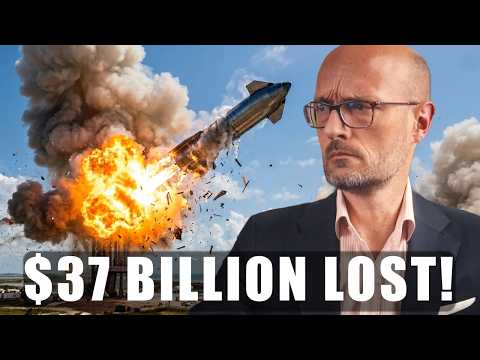
Source: Patrick Boyle — SpaceX IPO: Nice Try Though, 22 May 2026
What the prospectus actually contains
Boyle works through what the prospectus says, and repeatedly notes that his observations are not interpretation but direct references to the document. A US corporate-law professor has described, in his words, the deal structure offered to investors as follows: “no votes, no sales, and no suits” — no votes, no resale rights, no lawsuits. This is a notably blunt characterisation. It means you buy a share with no voting power, whose resale is restricted, and on which you cannot take basic legal recourse if you wish.
Alongside this, the prospectus contains other items that require patience to read. The CEO’s compensation package is partly tied to a Mars colony, which the company itself describes as “improbable”. An AI business unit, introduced in the filing, is reported as something the company’s own engineers do not use. Related-party transactions — deals between different companies in the same ownership group — are significant. And the whole business relies in the near term on a single rocket system, which is the company’s only source of revenue for the foreseeable future.
Boyle’s message is not that SpaceX is a bad company. His message is that reading the prospectus carefully between the lines is, all at once, more important than ever — because the offered deal is exceptional.
Lesson 1 — Investor, read between the lines
For the investor considering whether to enter, this episode’s lesson is simple. The numbers are the part of the prospectus everyone reads. But the deal structure around the numbers — voting rights, resale restrictions, legal recourse, compensation targets, related parties, dependence on a single component — is often more important than the numbers themselves. The numbers tell you what is. The deal structure tells you what you get.
A “no votes, no sales, no suits” structure is not necessarily criminal. It is lawful if investors accept it. But it is exceptionally unusual, and accepting it without clear compensation — for example a lower required return that would be reflected in price — means the investor is taking on more risk than they often notice.
This is a generally applicable principle. If you encounter, in any deal, an unusual term you do not understand the reason for, ask for its rationale. Do not take it as given. Most often an unusual term is there because it benefits the party that wrote the deal — and if that party is not you, the question is what compensates you for it.
Lesson 2 — Compensation tied to future targets is a signal
The second prospectus detail — compensation tied to a Mars colony the company itself considers “improbable” — is a classic example of how the structure of a compensation package can say more about the management than its publicly stated strategy.
When a founder ties their own compensation to a target the company itself treats as improbable, they communicate a few things at once. First: they believe they can turn the improbable into the probable. Second: they place a high stake on their own personal compensation. Third: they signal to investors that the compensation picture is partly visionary, not only deliverable.
This can be bold visioning. It can also be a way of pricing one’s own compensation so high that, whether it is reached or not, the company’s strategy has been steered to point in a direction that primarily serves the founder’s personal goal.
For an investor this matters to read. For a founder it matters to weigh: if I built a compensation structure that looked like this, what would it communicate to my own investors?
Lesson 3 — A one-rocket company is a one-rocket risk
Boyle highlights a simple observation often left out of the conversation: SpaceX’s business in the coming years rests essentially on a single rocket system whose success is the company’s basic precondition. This is an exceptional risk concentration, and it is visible in the prospectus.
For a founder this translates directly. A one-main-customer company is a one-main-customer risk. A one-technology-solution company is a one-technology-solution risk. A one-salesperson, one-channel, one-patent-application company are all concentrations that you know about — but that an investor may have to look at more carefully to fit into their own risk budget.
This does not mean a concentrated company cannot be built. It means concentration must be justified and its risks compensated — through a lower valuation, a higher required return or some other structural way that acknowledges the concentration for what it is.
Lesson 4 — For founders: a mirror
This is the episode’s quieter but most important lesson for the Finnish growth founder. The SpaceX prospectus is an extreme case, but its basic structure — the founder retains a substantial majority of votes, investor rights are limited, compensation is heavily tied to vision — is familiar from many well-known tech companies. The same logic is in use at various levels at Meta, Alphabet, Stripe, and many others.
When you build your own growth company, however, you do well to ask: what kind of agreement do I want to build with my own investors? What voting rights do I give? What resale restrictions do I set? What compensation structures do I use? Your answers form the structure on which your company grows — and changing that structure after the fact is usually far harder than building it at the start.
The SpaceX model is one alternative. It is not the only one. Particularly in Finnish and European investor environments there has traditionally been an expectation of more balance between founder and investor, and that is one reason capital can be raised here also on terms an American unicorn would not move from. This is not a weakness. It is a structural choice that suits a longer view of ownership being shared among shareholders.
What to take away
Boyle’s episode is 32 minutes, and it is worth hearing through if you are interested in what can really be read between the lines of a prospectus. Beyond it, three thoughts are useful for the Finnish founder and investor:
- Read the deal structure before the numbers. The numbers say what is. The deal structure says what you get — and if you get materially less than the numbers imply, price it in for yourself.
- Compensation structure is often a strategy document. What a company rewards steers its direction. Read it carefully and ask yourself whether that is the direction you want your investment to be heading.
- Concentration must be justified. A one-rocket company can be a great investment, but it must be priced as a one-rocket risk. The same goes for one-customer, one-channel or one-technology companies.
The SpaceX IPO is an exceptional case, and it does not directly concern every reader. But the logic of reading the prospectus does concern every reader. Boyle does that reading patiently, and that patience is the investor’s most important skill.

Continue reading
You may also like


Innohub TV
Watch this content also on Innohub TV
We picked clips from Innohub TV that continue the same topic.