
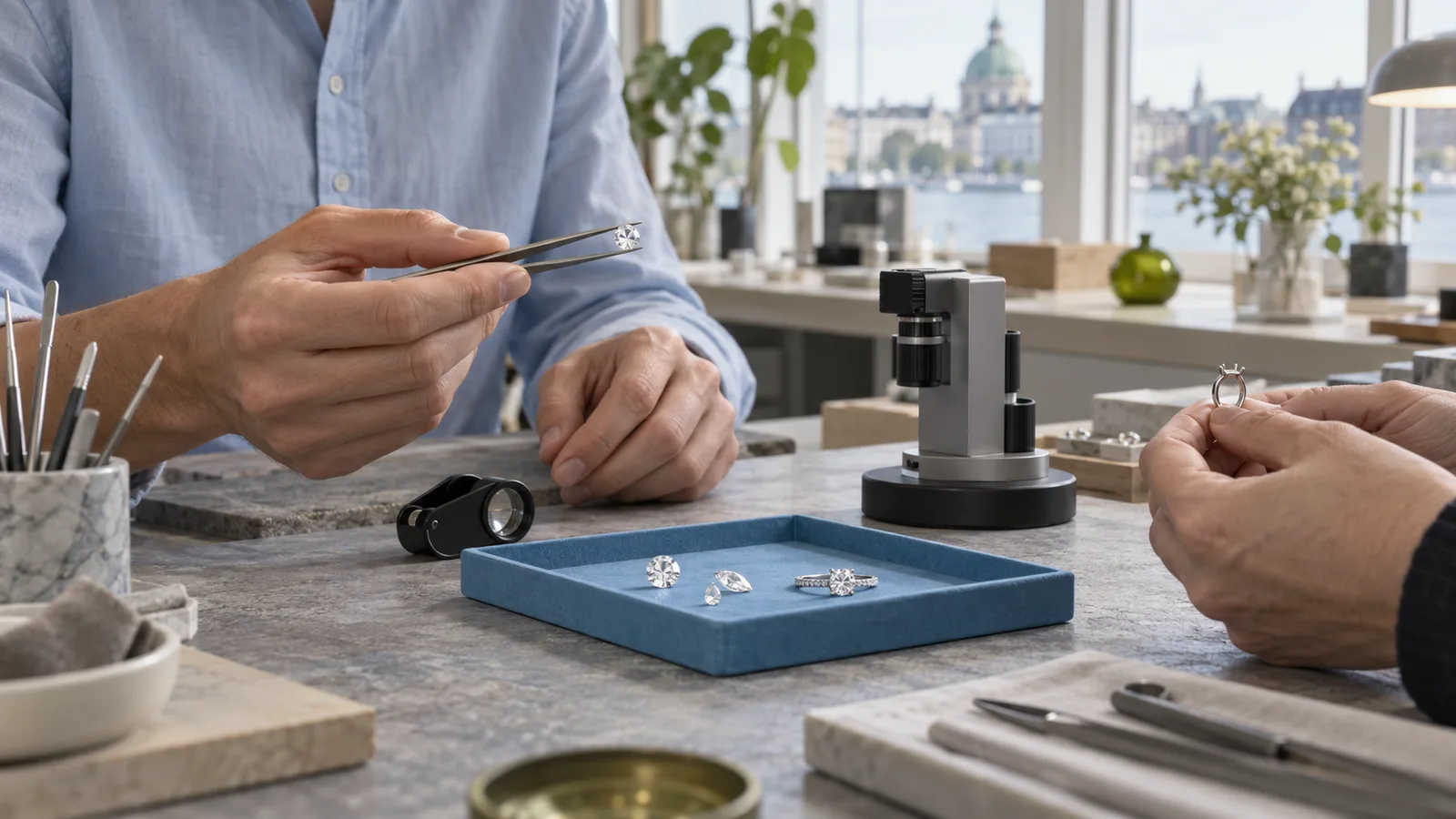
Sarah Jessica Parker's new role at Astrea London shows how founders are pairing star power with lab-grown diamond technology to redefine modern luxury.
Lab-grown diamonds get a Hollywood ambassador
Lab-grown diamonds have a new face, and it belongs to someone whose day job has nothing to do with gemology. On Bloomberg Television, actress Sarah Jessica Parker sat down to talk about her role as global creative director of Astrea London, a jewelry house built entirely on lab-grown stones. It’s an unusual title for an actress best known for a very different kind of glamour, and that is exactly what makes the appointment worth a second look for anyone building a brand of their own.
Parker was joined in the conversation by Astrea London’s founder, Nathalie Morrison, and the two discussed what drew a well-known actress to a jewelry startup built on laboratory technology rather than mined stone. Parker said she was drawn in by the combination of creativity and technology inside the brand, and that she found it exciting to try to “be worthy” of helping carve out a new form of luxury in the lab-grown diamond business. Trying to be worthy of a category, rather than simply branding it, is a useful way to think about what is happening in luxury retail right now.
Why a creative director, not just a spokesperson
Plenty of brands rent a famous face for a season of advertising. Astrea London did something more structural: it gave Parker an actual creative role tied to how the product looks and feels, not just how it is marketed. For a founder, the distinction matters. A spokesperson borrows attention; a creative director is expected to shape decisions. Morrison’s choice to build that role around someone with no formal jewelry background is a bet that outside creative judgment, paired with new production technology, can do more for a young brand than a famous name attached to a press release.
That bet lines up with a pattern covered elsewhere on Innohub: attention is increasingly won by genuine creative interest rather than by follower counts or celebrity wattage alone. Parker’s involvement reads less like a sponsorship and more like someone with real creative stakes in the outcome, which is a harder thing for a competitor to copy.
What Astrea London’s bet says about the lab-grown diamond market
Lab-grown diamonds are, chemically, the same material as mined stones; the difference is how they are made. That production shift is the real story behind Astrea London’s pitch. Morrison described the moment the industry is in as “a different era in luxury,” one she ties to sustainability, craftsmanship, beauty and design rather than to rarity extracted from the ground. It is a deliberate repositioning: instead of competing with mined diamonds on their own terms, scarcity and provenance, the pitch is that lab-grown stones let a brand compete on design and story instead.
That kind of reframing, built on a manufacturing change rather than a marketing slogan, is familiar to anyone who has watched a legacy process get replaced by a faster, more controllable one. Innohub has made a similar argument about rethinking the underlying process instead of bolting new technology onto an old one: the gains show up when the whole workflow is redesigned around what the new method actually makes possible, not when it is used to imitate the old one more cheaply.
The lesson for founders outside the jewelry trade
Few readers of this site are launching a diamond brand, but the underlying mechanics travel well beyond jewelry. Astrea London is a company built on a technology switch, lab growth instead of mining, that changes both the cost structure and the story a founder can tell. The same logic applies to any founder deciding whether to anchor a product on an established, expensive supply chain or an alternative approach with a different cost and risk profile. It also applies to resisting lock-in with a single supplier or platform, the same freedom-to-switch thinking Innohub has described for founders choosing open technology platforms over closed ones. The hard part is never the switch itself; it is building a brand narrative good enough that customers choose the new category on its own merits rather than as a cheaper substitute for the old one.
Morrison’s framing, sustainability, craftsmanship, beauty and design, is also a reminder that a technology-led business still has to win on taste and story, not specifications. A founder who leans only on “ours is made differently,” without matching it to genuine design quality, is making half the pitch Astrea London is making.
What this means for anyone building a brand
The headline fact is simple: a well-known actress joined a lab-grown diamond company as global creative director, not as a paid face. The useful fact is what that choice signals. Morrison built a role for genuine creative input rather than a license for a name, and she is betting that sustainability, craftsmanship and design can carry a new category further than rarity ever did. For founders outside the jewelry business, the transferable move is not the diamonds, it is the discipline: pick partners for judgment rather than just for reach, and make sure a technology-driven pitch is backed by a product good enough to win on its own terms.
A spokesperson borrows attention; a creative director is expected to shape decisions.
For founders outside the jewelry business, the transferable move is not the diamonds, it is the discipline: pick partners for judgment rather than just for reach, and make sure a technology-driven pitch is backed by a product good enough to win on its own terms.

Sources
- Sarah Jessica Parker, Astrea London Bet Big on Lab Grown Diamonds — Bloomberg Television interview with Sarah Jessica Parker and Astrea London founder Nathalie Morrison, published October 6, 2026.

Innohub TV
Watch this content also on Innohub TV
We picked clips from Innohub TV that continue the same topic.


