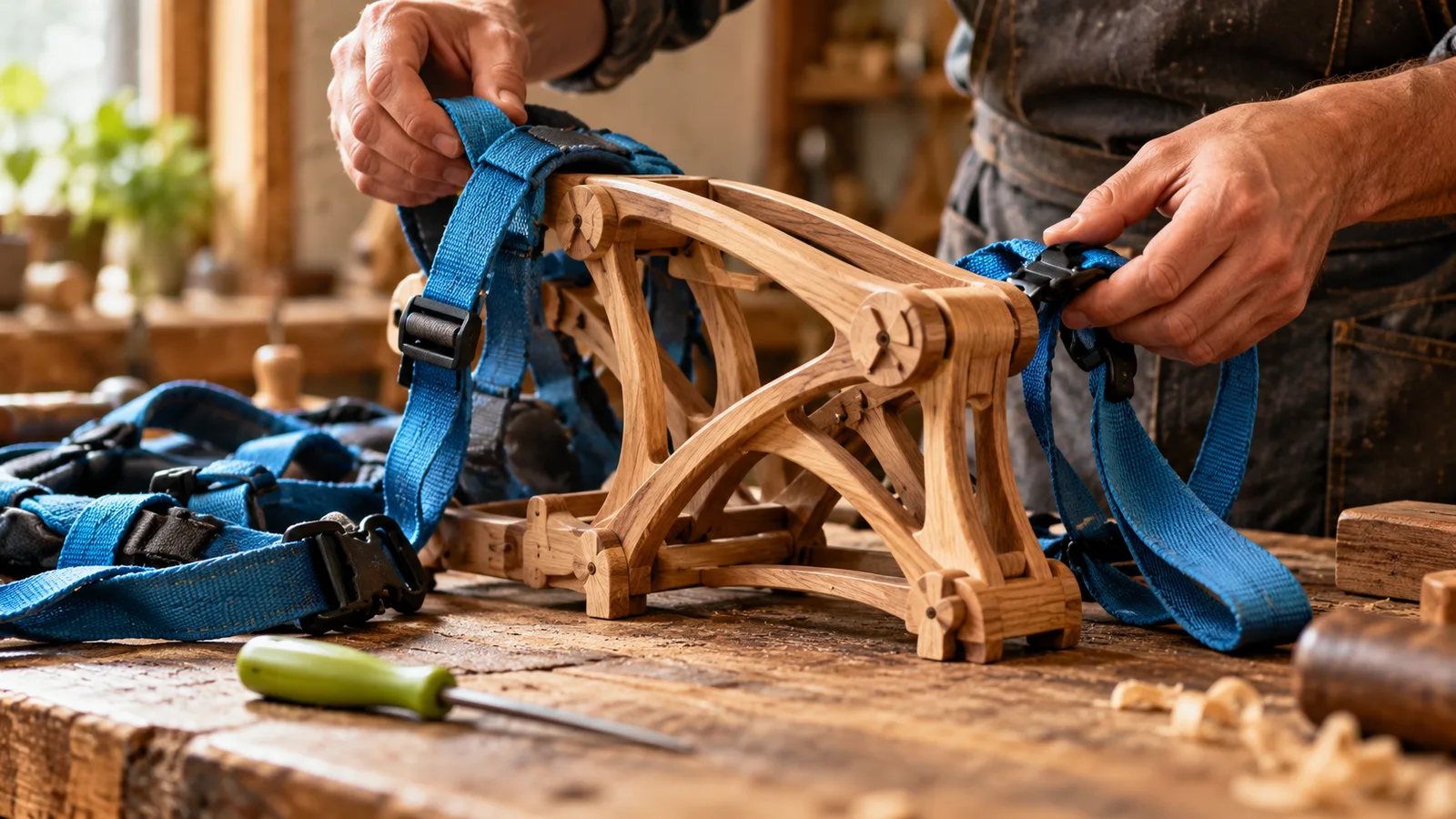
Cursor's former agent-harness engineer argues that as models absorb old patches, the harness's job shifts to infrastructure, security, trust and efficiency.
From Prompt Tricks to Harness Engineering
For two years, the hardest problem in AI coding tools wasn’t the model itself, it was everything wrapped around it. Every agent harness, the layer of retries, tool definitions, memory tricks and guardrails bolted onto a raw model call, existed because the model alone couldn’t be trusted to plan, remember or correct itself reliably.
Jediah Katz has spent more time inside that scaffolding than almost anyone in the industry. He was Cursor’s longest-tenured agent-harness engineer before moving to SpaceX, and in a recent conversation on the AI Engineer channel, he asked the question directly: is the agent harness dead?
Katz traces his own path from “prompt engineer,” someone who massaged wording until a model behaved, to “harness engineer,” someone who built entire systems of retries, memory and tool orchestration around a model that still needed constant supervision. That shift mirrored the wider industry: once clever prompting stopped being enough on its own, engineering effort moved into the code wrapped around the model rather than the words fed into it. Teams built retry loops, test scaffolds and context-management systems that, in effect, held the model’s hand through tasks it couldn’t finish unsupervised.
Peak Harness, and the Backlash
There was a point, Katz argues, where harnesses grew so elaborate they became a liability in their own right: brittle, over-engineered layers patched on top of a model that was, release after release, quietly getting better at doing those same jobs on its own. That triggered a backlash among engineers who began asking whether all that scaffolding was still worth maintaining, or whether it was simply slowing teams down while the underlying model caught up anyway.
The Data Flywheel Taught Models the Old Patches
The research Katz cites backs up that backlash. A data flywheel, each generation of models trained in part on how earlier agents actually behaved out in the world, has let newer models absorb skills that used to require custom harness logic: holding context across long tasks, catching their own mistakes mid-task, and deciding on their own when to reach for a tool. The agent harness that once had to compensate for a model’s blind spots now finds those blind spots shrinking with every release. It is a pattern that echoes something true well beyond software: rapid progress under pressure tends to make yesterday’s clever workaround obsolete almost as fast as it was built, the way many decisive inventions through history were born out of necessity and then overtaken by the next leap forward.
So Why Does the Harness Still Matter?
Katz’s answer isn’t nostalgia for the old scaffolding, it’s a reframing of what a harness is for. As models absorb yesterday’s patches, the harness’s job shifts toward opening frontiers a model cannot reach by itself. He points to projects like Grokbot as an example of a harness enabling an entirely new product category, rather than just papering over a model’s weaknesses.
Katz frames this as the harness’s second act: instead of compensating for weakness, it becomes the thing that lets a model attempt a job it was never trained to do unsupervised, from managing a whole codebase to running a business process end-to-end.
Three Jobs Models Will Never Absorb
Infrastructure
Running an agent reliably, at scale, somewhere other than a single engineer’s laptop is an engineering problem no model update solves by itself. Someone still has to build the pipes, the monitoring and the failure recovery underneath it.
Trust and Security
Deciding what an agent is allowed to touch, and verifying what it produces, remains a governance responsibility rather than a model capability. It’s the same logic behind calls to treat AI safety as a matter of enforced limits rather than promises, a principle that applies just as much to an agent writing production code as to a chatbot answering customer questions.
Efficiency
Cost discipline still lives in the harness: batching calls, caching context, routing each sub-task to the cheapest model that can handle it. For a small business watching every euro of its software budget, that discipline is what separates AI tools that genuinely pay for themselves from tools that quietly inflate a cloud bill while promising to cut costs.
Off the Laptop: The Next Six Months
Katz’s boldest prediction is specific: within six months, he expects 90% of agent work to run off the laptop. Agents will run in the cloud and in the background, triggered by events rather than typed out by a developer at a keyboard. That is an infrastructure claim as much as a product one. It assumes somebody has already built a harness capable of running unattended, securely, at a cost a business can actually tolerate.
That same shift from a tool on one laptop to infrastructure that runs itself is starting to show up outside engineering too. Management teams and boards are increasingly leaning on AI-assisted strategy tools built for the boardroom, not just the IDE, which suggests the harness Katz describes is becoming a template for how any business function absorbs AI, not just software engineering.
What Can Small Business Owners Take From This?
The lesson for any entrepreneur buying or building AI tools isn’t to chase the newest model release. It’s to ask who built the harness around it, and whether that harness earns trust the way reliable infrastructure always has, and loses it the way a collapse in infrastructure trust can wipe out a business overnight. As models keep getting smarter, the competitive edge for small businesses won’t come from the model everyone can buy access to. It will come from the harness around it, the part nobody else can copy.
The agent harness that once had to compensate for a model’s blind spots now finds those blind spots shrinking with every release.
As models keep getting smarter, the competitive edge for small businesses won’t come from the model everyone can buy access to.

Sources
- Smarter Models Killed the Harness. Here's What's Left — Jediah Katz, SpaceXAI (AI Engineer channel) — Source interview on the changing role of AI agent harnesses.

Continue reading
You may also like




Innohub TV
Watch this content also on Innohub TV
We picked clips from Innohub TV that continue the same topic.