

Despre canal
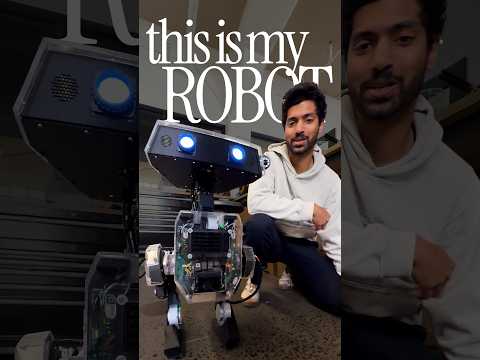
Founders, Inc. aduce în prim-plan oameni care construiesc dispozitive și încearcă să transforme idei tehnice în afaceri. Robotica, componentele mecanice, inteligența artificială și proiectele…
Founders, Inc. aduce în prim-plan oameni care construiesc dispozitive și încearcă să transforme idei tehnice în afaceri. Robotica, componentele mecanice, inteligența artificială și proiectele aerospațiale apar alături de întrebări despre munca de fond a unui fondator. Selecția pune accent pe obiecte și experimente concrete: ce a construit cineva, ce problemă urmărește și ce face diferit produsul prezentat. Antreprenoriatul este văzut astfel dinspre realizarea unui prototip și lucrul la o tehnologie, nu doar prin discuții despre finanțare.
Printre exemple se află un actuator capabil să își detecteze propria stare, un proiect descris drept creier artificial și o inițiativă de turnare a metalelor. Alte materiale explorează stații de comunicare cu inteligență artificială, o mașină personală zburătoare sau folosirea laserelor sub apă. Aceste teme conturează un interes pentru dispozitive fizice și pentru felul în care software-ul poate intra în alcătuirea lor. Un proiect construit pentru bunicul creatorului adaugă și perspectiva unei nevoi personale aflate la originea unui produs.
Clipurile sunt prezentate ca portrete de constructori, introduceri în proiecte și explicații despre ideile din spatele unor invenții. Printre ele există și o temă foarte practică pentru fondatori: cum abordezi sarcinile pe care nu îți place să le faci. Canalul poate atrage persoane interesate de inginerie, robotică și startupuri care dezvoltă produse tangibile. Câștigul pentru privitor este contactul cu o varietate de probleme tehnice și motivații antreprenoriale, de la un mecanism particular până la ambiția de a schimba felul în care folosim un dispozitiv.
Cel mai nou episod
he invented 500x faster electromagnetic simulations | The Founders Inc Podcast | Episode 12
Anurag Mundhada, founder of Faraday Loop, explains how AI and neural operators can speed up electromagnetic simulation for AI chip design.
Faraday Loop is building a physics-grounded foundation…
Anurag Mundhada, founder of Faraday Loop, explains how AI and neural operators can speed up electromagnetic simulation for AI chip design.
Faraday Loop is building a physics-grounded foundation model for electrical engineering. Instead of solving Maxwell's equations point by point, its neural networks learn how electromagnetic fields behave, so engineers (and AI agents) can simulate chips, PCBs, antennas and RF front ends far faster than with a traditional EM solver. Anurag puts the speedup at 100x to 500x with close to the same accuracy.
In this episode of the Founders Inc podcast, we sit down with Anurag to hear how he sold his first startup, a healthcare diagnostics company, while still in college, then moved through computer vision, efficient on-device neural networks, LLM agents and retrieval (RAG), and a consulting project with a simulation company that led him to a closed loop for hardware design. Then we get into the physics and the engineering.
In this conversation you'll learn:
- How neural operators and physics-informed neural networks differ from ordinary neural networks, and why they can learn physics instead of just data
- Why electromagnetic simulation is slow, and how EM solvers use meshing to solve millions or billions of equations
- Time domain vs frequency domain solvers, and what it means to run a circuit at 10 GHz
- Why delivering power to AI chips is so hard: power integrity vs signal integrity, voltage droop, capacitors, inductors, LC resonance and the ball grid array
- Why chipmakers can't just raise the voltage (hint: cost per token)
- How AI agents can run simulations in a loop for design space exploration, and what "vibe hardware engineering" could become
- Why the bitter lesson has eaten software but not hardware yet
- Reinforcement learning explained, plus quantization, sparse vs dense retrieval (BM25 and cosine similarity) and hybrid RAG pipelines
TIMESTAMPS
0:09 Meet Anurag Mundhada, founder and CEO of Faraday Loop
1:40 First startup: healthcare diagnostics in India
2:50 Getting acquired in under two years, while still in college
3:55 Back to IIT Bombay for computer vision research
4:41 Human pose estimation and self-driving cars
6:10 Research with Mercedes-Benz and Bosch, then startup #2
6:41 Building a Kinect competitor that runs on a phone
8:42 What is quantization in neural networks?
11:45 Consulting on LLM agents and deep research
12:45 RAG explained: embeddings and cosine similarity
13:45 Sparse vs dense retrieval and hybrid retrieval pipelines
15:51 Why almost 60% of retrieved chunks aren't relevant
17:53 Radiology AI, then a simulation company
20:35 Vibe hardware engineering and the autonomous factory
21:15 Why the bitter lesson hasn't reached hardware yet
22:36 Reinforcement learning explained
24:39 Why electromagnetic solver speed is the bottleneck
25:20 Neural operators: 100x to 500x faster simulation
26:21 A foundation model for physics
26:41 Where it starts: AI chips, antennas and RF front ends
28:24 Power integrity vs signal integrity in AI chips
30:04 Capacitors, inductors, and resonance explained
33:45 Why chipmakers can't just raise the voltage (cost per token)
36:26 Where circuit theory breaks down on real hardware
39:47 How EM solvers work: meshing and Maxwell's equations
41:08 Why solving millions of coupled equations is so hard
42:28 Frequency domain vs time domain simulation
44:10 What does "running a circuit at 10 GHz" mean?
45:31 Foundation models vs simulations
46:31 Neural operators
48:12 What fast physics simulation unlocks: design space exploration
49:12 20% efficiency gains and AI-designed hardware
49:53 Surrogate models vs learning the actual physics
50:13 Wrap-up
Learn more about Faraday Loop: faradayloop.com
Want a part two? Tell us in the comments!
Subscribe for more conversations with founders building the future.
#AIchipdesign #electromagnetics #neuraloperators #foundersinc #podcast
YouTube Shorts




Uploads
Alte episoade de pe acest canal
they invented a nanoscale video camera
6.11.2026
Akshay & Annirudh are the founders of Pivector Labs, a company building ultra-fast atomic force microscopes to inspect AI chips at a nano scale. In this video, they take us through how chips are...
This Startup is Building Hardware That Can Actually Feel | The Founders Inc Podcast | Episode 11
3.11.2026
Dead Reckoning is giving robots a sense of touch: a millimeter-thin, skin-like sensor and software inspired by human biology that lets industrial arms handle the delicate last inch of a job, so factories can...
This AI Model Keeps Learning Even After Training Ends | The Founders Inc Podcast | Episode 10
28.10.2026
Sous Labs is building foundation models that keep learning after training, so an AI can pick up a task it has never seen the way your favorite intern does, instead of staying frozen at...
he came to america alone at 15, now he's augmenting reality | The Founders Inc Podcast | Episode 9
22.10.2026
Jon Solomon came to the US alone at 15, started an electric skateboarding community that grew to 5,000 riders, made $100K installing smart homes during COVID, and went from community college to working with...
How Jim Belosic Grew SendCutSend
22.10.2026
Jim Belosic is the founder of SendCutSend, a laser cutting company that ships bespoke parts across the country to both small businesses, individual builders, and large companies. Over the last 10 years, he built...
how to deploy an ai model on a chip with a single click | The Founders Inc Podcast | Episode 8
20.10.2026
Config AI is building a compiler that takes your PyTorch model and deploys it onto an FPGA chip with a single click, so you don’t need a team of hardware engineers to get there....
This Startup is Making Robots Feel the Weight of a Paperclip | The Founders Inc Podcast | Episode 7
20.10.2026
Silica is building actuators with sensors embedded in the joint, so robots can feel forces as light as a paperclip (1-2 grams) at a price the whole market can afford, instead of stumbling around...
The Startup Fixing The Hidden Bottleneck Behind AI Chips | The Founders Inc Podcast | Episode 6
14.10.2026
Pivector Labs is building atomic-scale metrology tools for semiconductor fabrication labs (fabs). Their goal is to make atomic force microscopy (AFM) fast enough to use inside the fab, so chipmakers can catch defects that...
We built our own humanoid robot | The Founders Inc Podcast | Episode 5
12.10.2026
Lucen Robotics is building the world's first humanoid robotics dev kit: a modular, affordable, repairable platform that anyone from a first-time hobbyist to a university research lab can build on, train, and break. In...
How International Startup Founders Can Move to San Francisco | The Founders Inc Podcast | Episode 4
3.10.2026
Thinking about leaving your home country to build a startup in San Francisco? In this episode, Mike Shin, COO of Founders Inc., explains how international founders can land in SF, build real relationships, handle...
how im building an artificial brain | The Founders Inc Podcast | Episode 3
1.10.2026
Alexander A. Wolf is the founder and CEO of Artificial Brains, a startup building artificial synthetic brains designed to give robots the ability to learn and adapt in real time without massive datasets or...
How I Built a Metal Casting Startup | The Founders Inc Podcast | Episode 2
26.9.2026
Connor Kapoor is the founder of Digital Metal, a metal parts casting service that quotes you in seconds and delivers in days. Full breakdown below: 0:00 Meet Connor, founder of Digital Metal 0:45 Why...
startups: how to run operations | The Founders Inc Podcast | Episode 1
18.9.2026
Why do so many founders ignore operations until it's too late? Mike Shin, COO at Founders, Inc., explains what startup operations really is, who to hire for it, and the costly mistakes he's seen...
Canopy Festival - 24 Teams Live from Fort Mason
23.5.2026
Founders, Inc. is where founders build epic companies.
Off Season Festival - the most ambitious kids on earth.
2.8.2025
We brought builders from around the world. Come vibe with us while they share what they've built
he built the world’s largest GPU network (lessons from founders)
28.6.2025
Apply NOW: https://f.inc/apply/yt on Oct 1st we're going to invite 38 teams of hardware founders ready to go all in If you're building in aerospace, manufacturing, humanoids, ai hardware, software for hardware or literally...
how to grow an audience for your startup - Greg Isenberg
13.5.2025
Apply NOW: https://f.inc/apply/yt on Oct 1st we're going to invite 38 teams of hardware founders ready to go all in If you're building in aerospace, manufacturing, humanoids, ai hardware, software for hardware or literally...
Continuă lectura
Te-ar putea interesa și




Innohub TV
Vezi acest conținut și pe Innohub TV
Am ales pentru tine clipuri de pe Innohub TV care continuă aceeași temă.
