
Portugal PM Montenegro: Europe Cannot Become “a Museum” of Regulation and Bureaucracy
Jakson tiedot
Jakson kuvaus
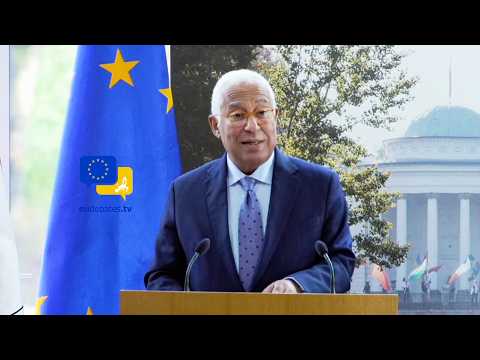
Portuguese Prime Minister Luís Montenegro used his address to the European Parliament to call for a more competitive, less bureaucratic and more ambitious Europe. Marking 40 years of Portugal’s membership of the European project, Montenegro said European integration had helped transform his country and remained central to Portugal’s future. But he argued that Europe now needs to change the way it works. “We must only regulate where regulation is really essential.” Montenegro called for what he described as a “war on bureaucracy and over-regulation”, warning that excessive rules risk holding back European competitiveness, investment and innovation. “Europe can’t be a think tank spewing out standards or a museum.” He said Europe should instead become a “bold, vibrant Europe” capable of leading in the economy, security, culture, science and technology. Artificial intelligence and the next industrial transformation were central to that message. Montenegro called for more productivity, reindustrialisation, skilled and well-paid jobs, stronger investment capacity and progress on the Savings and Investment Union and Banking Union. He also addressed the next EU long-term budget, saying Europe needs to finance new priorities without weakening cohesion and agriculture. “There is no European competitiveness without cohesion. And there is no European cohesion without competitiveness.” Energy was another major focus. Montenegro called for coordinated European responses to high prices and greater efforts to reduce external dependencies. He pointed to Portugal, where he said more than 70% of electricity now comes from renewable sources, arguing that greater energy autonomy can also support competitive prices. Europe, he said, must accelerate electrification, invest in grids and strengthen cross-border interconnections. “If we fail to do this, we will continue to be at the mercy of others’ decisions.” Montenegro also addressed housing and migration. He said Portugal had tightened its migration framework after what he described as an unsustainable increase in arrivals, while maintaining support for legal migration and integration. “Our doors are not closed, but that does not mean they’re wide open to all comers.” His proposed approach combines…
Katso myös samalta kanavalta
Muut jaksot tältä kanavalta




Sinua saattaisi kiinnostaa
