

The ceiling has never been higher. Your floor has not moved.
In 2005 Sam Altman was a Stanford sophomore in Y Combinator’s first batch, building a startup in a little Cambridge office while Paul Graham cooked dinner for the founders. Twenty years later, as co-founder and chief executive of OpenAI, he closed Startup School 2026 in conversation with YC’s Garry Tan, and the line the event carried away with it was that there has never been a better time to start a company, because the ceiling for what a startup can take on has never been higher. The claim deserves to be taken seriously rather than cheered or mocked, because it is worded more carefully than most things said from that stage. That care is where the argument for it and the argument against it both sit.
Read the sentence again. A ceiling is the top of a range, not its middle. What is being asserted is that the largest thing a very small team can now attempt has risen, and on that narrow point the evidence is uncomfortable to argue with: work that used to need a department is now within reach of three people and a subscription. But a claim about the ceiling says nothing about the median company, and nothing whatsoever about the floor. The floor is the minimum a business needs to survive its first two winters: rent, invoices paid sixty days late, a home market of one country and one language, a tax authority indifferent to your ambition. None of that has been rewritten. The gap between floor and ceiling widened, and a higher ceiling is good news only if you were reaching for it.
So who is the claim for? The conversation’s own chapter list answers that. Ambition, conviction, finding people who share it, building OpenAI when nobody believed in AGI, earnestness and ignoring the haters. This is addressed to the founder whose plan runs a decade and whose bet is that a technology shift will invalidate the incumbents before it invalidates them. If that is your plan, watch it; it is aimed at you. If your plan is to bill enough hours a month to cover a household and a van, none of it is wrong, but very little of it is about you. The advice is not diluted by scale so much as it quietly presumes one. The exception is one chapter in that list, on helping people before you know why, which costs the same at any size and is the only piece here that a sole trader can act on this week.
The most transferable idea is the one about why startups win during technology shifts, and it does hold at any size. An incumbent’s constraint is rarely capital or intelligence. It is the business it already owns: trained staff, signed contracts, a process that works well enough that changing it is expensive. A company of two carries none of that weight, so its cost of changing how it works is close to zero. That is a real advantage and it belongs to a bookkeeper or a joiner as much as to a laboratory. It is also perishable. Every year you trade, you accumulate your own small version of the thing that makes incumbents slow.
What is oversold is the unspoken implication that a rising ceiling is a private gift. Capability that arrives as a purchase is sold to everyone attempting the same thing, at roughly the same price. The moment your advantage has a price list, it is not an advantage; it is an operating cost your competitors also pay. What actually separates small companies afterwards is what was never on that list: the customer who trusts you, knowledge of a local market too small to interest anyone with a fund behind them, a licence, a physical presence, a relationship that took nine years. Tools raise the ceiling for everybody in the room at once, which is another way of saying they raise the standard you are judged against.
Then there is the ending. The final chapter is titled, in quotation marks, “It’s All Going to Work Out.” That is a decent thing to feel and a poor thing to plan around, and it is worth noticing who is saying it: someone for whom it did work out, to a room of people selected for wanting the same outcome. Nobody schedules a closing keynote from the founders it did not work out for. That is not dishonesty but the structure of the format, and the correction has to come from the listener. Optimism from the survivor is data about the survivor.
Which is why the stretch most useful to a small European business is probably the part that sounds least like startup advice. From the safety incident that changed the stakes through to preventing AI from concentrating power runs the better part of seven minutes of a thirty-nine minute conversation. Whether the capability everyone is now building on ends up held by a handful of firms is not a philosophical question for a two-person company. It is procurement. It sets the price of your inputs, decides whether your supplier can be swapped next year, and determines how much of your daily workflow you can safely stand on top of somebody else’s roadmap. It is also being discussed by a person who runs one of the firms in question, which does not make it less worth hearing, only worth hearing with that fact held in view.
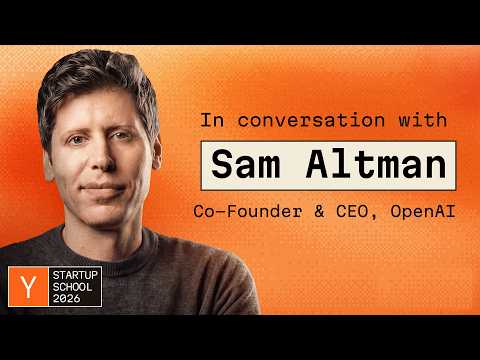
Watch the episode on Innohub TV 39 min
My verdict after the full thirty-nine minutes: the claim is true as stated and almost always repeated as something much broader than it says. Yes, the ceiling has risen, and for the founder who intends to spend a decade and wants people who share the conviction, this is a genuinely better decade to begin in than 2005 was. For the four-person company in Tallinn, Porto or Kuopio, the honest translation is narrower and less quotable: the cost of attempting something has fallen far enough that hesitation is now more expensive than a failed experiment. That is worth acting on. It is not the same promise, and treating it as the same promise is how a good business talks itself into a plan built for somebody else’s balance sheet. The ceiling went up. Whether that matters to you depends on whether you were standing anywhere near it, and that was always a decision rather than a market condition.
Innohub TV
Watch this content also on Innohub TV
We picked clips from Innohub TV that continue the same topic.


